Wednesday, December 27, 2017

Casino.org
Las Vegas Hits NFL Jackpot in 2017 with Oakland Raiders Decision to Relocate

Much to the delight of Las Vegas football fans and city officials, the Oakland Raiders became the second major professional sports team to decide to make the eventual move to southern Nevada this year.
Oakland Raiders moving to Las Vegas

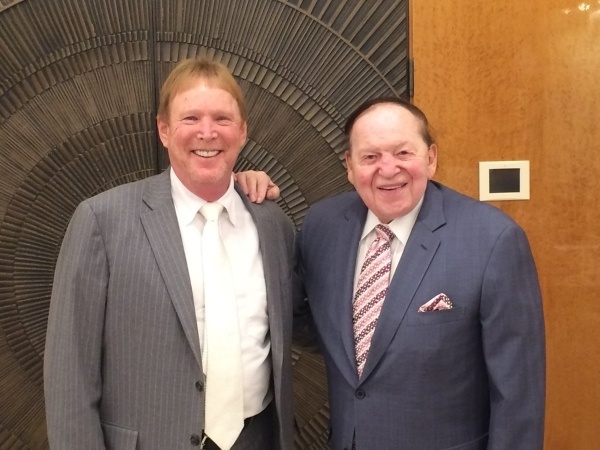
Raiders owner Mark Davis initially relied on the funding of Las Vegas Sands founder Sheldon Adelson to bring his team to the city but had to find other financing when the casino magnate pulled out of the deal. (Image: Twitter)

The NFL team joined the NHL’s Vegas Golden Knights in Southern Nevada, though its road to the Strip was a lot bumpier than the one the hockey organization had to navigate.

The idea of leaving the Bay Area came as early as 2009 as the team was trying to get a new stadium built but was having little success. Two years later Al Davis died and his son Mark took control of the team.

He had no more luck getting Oakland to build a facility than his father did and in 2013 when the lease expired he started exploring alternatives to the Oakland Coliseum. Several possibilities and rumors started popping up periodically and included everything from sharing Levi Stadium with the San Francisco 49ers to being courted by San Antonio.

Vegas Makes its Case

In 2015 the Raiders plan to return to the Los Angeles market fell through when the NFL rejected their relocation request. The Rams and the Chargers were picked to come to the Southern California market.

The whispers of the Raiders having interest in Sin City got louder and then became deafening when Davis met with Las Vegas Sands Owner Sheldon Adelson in January 2016 about getting his financial backing for a new 65,000 seat stadium. The casino magnate agreed and said he would put up $150 million of the then proposed $1.4 billion cost. He later increased that amount to $650 million. Davis would provide $500 million from a Goldman Sachs loan and a hotel tax would fund the rest.

Slowly owners of other NFL organizations began to warm to the idea of a football team in a town that offered sportsbetting. Jerry Jones, Robert Kraft, and Stan Kroenke, owners of the Cowboys, Patriots, and the now-Los Angeles Rams, all publicly declared their support for the Raiders move from Oakland.

One person who didn’t like the idea was NFL Commissioner Roger Goodell. He was a staunch opponent of sportsbetting and sternly voiced his opposition to the plan.

Setback, Then Success

By January of 2017 it looked like Goodell might get his wish. Adelson pulled out of the project taking his pledge of $650 million with him. Goldman Sachs then announced they were pulling its financing for Davis’ $500 million. Suddenly Davis was without more than half of the funds for the now budgeted $1.9 billion stadium and the deal was in danger of falling apart.

It took two months but Davis found another backer, getting Bank of America to pony up Adelson’s share and his loan at the beginning of March. The only detail left was approval by the owners. That happened three weeks later at the owners meeting in Phoenix as they voted 31-1 in favor of the move with only Miami Dolphins owner Stephen M. Ross dissenting.

The Raiders would move to Las Vegas for the 2020 season and Davis was exuberant after the decision.

“My father used to say that the greatness of the Raiders was in its future,” Davis said. “The opportunity to build a world-class stadium in the entertainment capital of the world will give us the opportunity to achieve that greatness.”

The post Las Vegas Hits NFL Jackpot in 2017 with Oakland Raiders Decision to Relocate appeared first on Casino.org.

Casino Listings
Japan Looking to Allow Family Members Self-Exclude Their Kin

With gambling expansion coming to Japan, lawmakers are looking to allow for family members to self-exclude their relatives that they feel may have a gambling addiction problem.

World Casino News
Land casino reportedly places Blockchain gambling machine

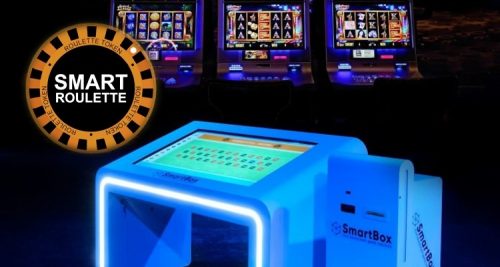
The Ethereum blockchain development company SmartPlay has reportedly placed one of their cryptocurrency gambling machines in a land-based casino. The SmartBox machine operates on smart contracts using the Ethereum blockchain. This is a separate blockchain than Bitcoin is found on and ETH has its own value. Rather than having a random number generator and gaming software within the machine itself, the gambling program is actually written into the blockchain. The sponsored post, which the company placed on Bitcoinist.com, does not go into much detail about what sort of games are available on the machine, nor where it is located. However, the company's official web page notes the production of the first blockchain gambling machine on November 16, 2017, and references only SmartRoulette as a game developed at that point in time. Company documents indicate that future developments will include poker, blackjack, and slots. The machine is said to accept fiat currency (most likely paper rubles) which then converts them into the company's own coin called the RLT (roulette token). The alt-coins are available for purchase and sale on Russia's LiveCoin exchange (account required) and have been listed on the Eidoo Exchange. The machine, as currently deployed, is only for beta testing and proof of concept, no real money bets are being accepted on it at the undisclosed casino location. If the beta test is successful the company plans to start mass production of the SmartBox. SmartPlay did an initial coin offering (ICO) on April 7, 2017,  with the goal of raising $100,000 to $150,000 by offering 2.5 million units of 10 million created at an initial price of 0.0015 ETH at the time. The value of the RLT was about $0.07 based on ETH currency and with the explosion of the markets is now worth about $1.15. The ICO was worth $126,150 at the exchange rate as of 04/10/2017 at the end of the three-day sale. The number of tokens sold was 1,874,170. One interesting element of the game machine is that one-half of one-percent of each bit is returned to players as a bonus in RLT coins. The company looks at this is a way for players to own part of SmartPlay and to profit off the gambling of future players. The company claims to have already paid more than $300,000 to players in the form of RLT tokens. The company's smartroulette.io website is operational but US players have been restricted since May of this year. According to a quote in the company's press releases, Philipe Comini, CEO of the Gimmer project said: "SmartBox looks pretty reliable and I can see the technology is going forward, so I give my thumbs up and hope everybody can join as well. [It's] a very revolutionary technology introducing the blockchain on gambling, and I’m really watching for SmartBox". One selling point the company is using to place its machines on live casino floors is that they will be able to eliminate croupiers, cashiers, and accountants as all processes are handled via smart contracts on the blockchain. The games are also probably fair as nobody, not even SmartPlay can change the blockchain once it is written.

Tuesday, December 26, 2017

Casino News Daily
Biggest Live Poker Comebacks of 2017

Professional poker is a tough field and it requires a great amount of diverse qualities and skills for one to establish themselves as a big name. The three players below have each established themselves as members of poker’s elite. However, they had felt forced for one reason or another to withdraw from the limelight. And 2017 turned out to be the year of their comeback or the year they have indicated that we could anticipate their comeback in near future.

Here are the three players that we have seen little of over the past several years, but we are quite certain that they have a lot to show.

Chris Ferguson

Chris Ferguson has been praised by many for his qualities and skills of a poker player. However, he has drawn an equal amount of negativism towards himself due to his alleged involvement in the 2011 Full Tilt Poker Ponzi scheme scandal.

In a nutshell, Ferguson, who was co-founder of Full Tilt Poker, and three other individuals at the online poker room were indicted by the US Department of Justice for allegedly running a Ponzi scheme that had paid out nearly $450 million worth of players’ money to themselves. While Ferguson never admitted to being part of such a scheme and his guilt never was never proved, doubt over his integrity has remained within the poker community.

Following his indictment, the 2000 WSOP Main Event champion disappeared completely from poker. Little was heard of Ferguson in the years after 2011. The player eventually reappeared on the live poker stage last summer, when he joined the flock of WSOP participants in Las Vegas.

He cashed in ten events last summer, with his fourth-place finish in the $10,000 No-Limit Hold’em 6-Handed Championship marking his deepest run. While Ferguson made his official comeback last year, it can be said that it was this year that he made bigger headlines.

Following this year’s editions of the WSOP and WSOP Europe festivals, the player was crowned the 2017 WSOP Player of the Year. Ferguson cashed in 17 WSOP events during the summer series and in five more during the WSOP Europe that took place in October at King’s Casino Rozvadov in the Czech Republic to collect 1,178.53 points and top the prestigious ranking.

In Las Vegas, he made two final tables, finishing fourth in the $10,000 Pot-Limit Omaha Hi-Lo 8 or Better Championship for $150,929, and second in the $10,000 Seven Card Stud Championship for $151,700. In Rozvadov, he topped the field of the €1,650 Pot-Limit Omaha Hi-Lo 8 or Better for €39,289 and his sixth WSOP gold bracelet.

Ferguson clearly re-entered the world of live tournament poker with flying colors. However, there were quite a lot of people who were not ready to welcome him back happily. Daniel Negreanu, known to be among the most outspoken representatives of the global poker community, criticized his fellow player for never offering an apology to those affected by the 2011 Full Tilt Poker scandal.

Negreanu first commented on Ferguson’s return last year and maintained his stance this year, as well. He took to Twitter when Phil Hellmuth posted a picture of him and Ferguson on his profile during the WSOP Europe.

Despite the stream of negativity towards Ferguson, there were also players who seemed to be ready to give him a chance. In a recent podcast, UK poker pro Charlie Carrel dwelt that people should be nicer to the disgraced player. Carrel also went on to say that multiple poker insiders have told him Ferguson was almost certainly innocent.

Gus Hansen

After building a terrific poker career and reputation as one of the world’s most skillful poker professionals, Gus Hansen disappeared from the public eye and from the poker stage. Losing millions of dollars at the online tables of PokerStars and Full Tilt, the player made a life-changing decision to move away from poker, at least for a while and channel his attention to something completely different.

The player has been rumored to have lost over $20 million in high stakes cash games. He said in a 2014 interview with Danish poker news outlet Pokernyhederne, that he blamed himself for his bad run and that he was considering switching to lower stakes poker. Eventually, the player left the poker stage altogether for several years. Until last year.

First indications that the player was returning to poker appeared last summer when it was reported that he was seen at the cash game tables of various Las Vegas casinos. In a November 2016 interview with Poker News, the Great Dane, as he is known in the poker community, confirmed that he was planning to re-enter the poker stage in 2017. Hansen was seen at more cash games during the first half of the year.

This spring, he even made his first televised appearance. He took part in the Celebrity Cash Kings cash game festival at King’s Casino Rozvadov, playing against Antanas Guoga, Leon Tsoukernik, and Sam Trickett, among others.

Most recently, Hansen appeared in a prestigious live tournament. The player took part in this year’s WPT Five Diamond World Poker Classic $10,400. Here it is interesting to note that he took down the first ever such event back in May 2002. This was his first in-the-money finish ever, and his first live tournament title ever. Hansen did not cash during the 2017 edition of the event, but at least we know now that he is making steps towards returning to poker.

Phil Ivey

Ivey has had quite a rough time off the felt over the past several years. The player is being sued by Atlantic City’s Borgata and failed in his attempt to sue London’s Crockfords Casino over its refusal to pay him out £7.7 million in baccarat winnings from 2012. Both lawsuits were related to his use of the controversial edge-sorting technique while playing baccarat at the two gambling venues with his companion player Cheung Yin Sun.
The more publicity the cases gained, the less we heard from Ivey, whom many consider one of the world’s best poker professionals and card players as a whole. One of the cases was concluded in October, but the outcome was not in the player’s favor.

Ivey lost his appeal to the Supreme Court of the United Kingdom, with Supreme Court justices upholding the Court of Appeal’s decision from 2016 that Crockfords Casino should not pay the player his winnings due to his use of edge-sorting to gain advantage.

January 2016 was the last time the player cashed in a live tournament. He finished fifth in the $200,000 Triton Super High Roller for $656,500. The player has not taken part in a live tournament since then. What is more, few knew where he was exactly until the second half of 2017, when reports emerged that he was playing cash games at Macau casinos.

Many hoped that Ivey will return to the live tournament stage during the WSOP this summer. This did not happen, but it seems that the player has said in a recent interview with an Asian media outlet that he plans to make his comeback in 2018.

It is also important to note that Ivey was inducted into the Poker Hall of Fame this year, along with the late David “Devilfish” Ulliott.

The post Biggest Live Poker Comebacks of 2017 appeared first on Casino News Daily.

Casino.org
Achieving Immortality: Which Gaming Icons Left Their Mark in 2017 Through Charity, Politics, and Sports

From powermongers like Sheldon Adelson to the billionaire Fertitta brothers, 2017 saw some gutsy and passionate moves by the gaming industry’s most illustrious movers and shakers.

gaming icons Sheldon Adelson Las Vegas

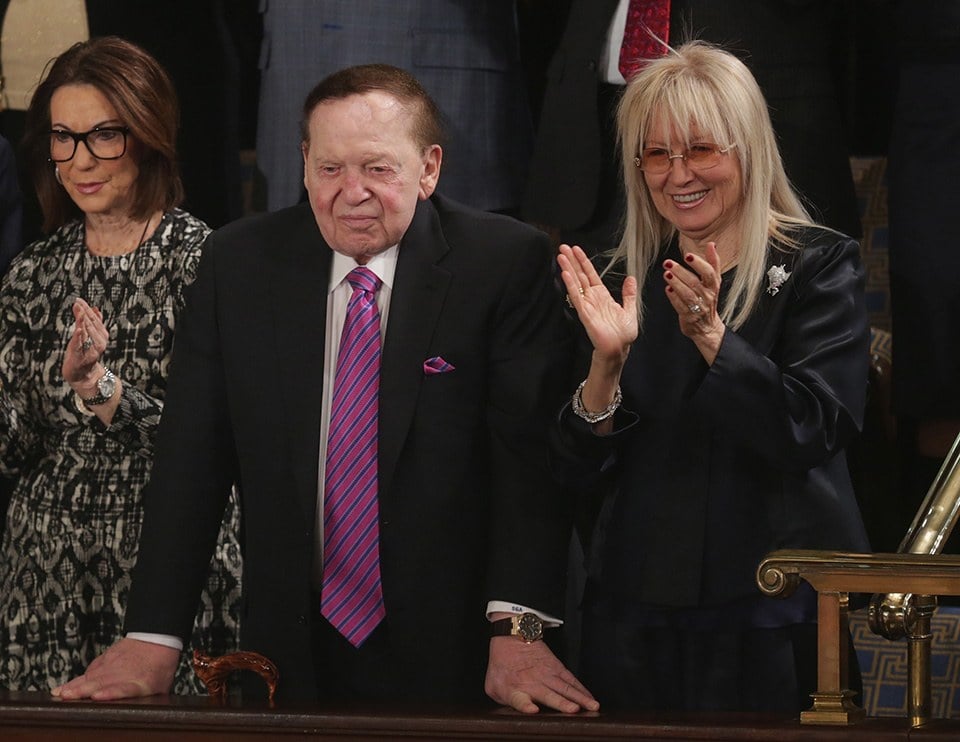
Sheldon Adelson started the conversation of bringing the Oakland Raiders to Las Vegas, just one of 2017’s crowning moments in the gaming industry. But the Sands CEO didn’t get to reap the glory when all was said and done. (Image: Chip Somodevilla/Getty)

Whether it was millions of dollars in donations in times of crisis and natural disaster, political influencing in DC through campaign contributions, or multibillion-dollar deals towards professional sports teams, the gaming icons were busy in 2017.

Here’s a look back at some of the legacies these moguls created.

Tragedy at Mandalay Bay

On October 1, gunman Stephen Paddock opened fire from the 32nd floor of the Mandalay Bay onto the Route 91 Harvest country music festival crowd below. Some ten minutes later, 58 victims had lost their lives from his heavy artillery fire.

The casino industry quickly stepped up to provide relief. Billionaire Sheldon Adelson, through his company Las Vegas Sands and the Adelson Family Foundation, gave $4 million to help victims. MGM Resorts, parent company to Mandalay Bay, gave $3 million.

Stations Casinos, owned by Frank and Lorenzo Fertitta, gave $1 million, as did the UFC and Las Vegas-based retailer Zappos, with the latter also offering to cover every victim’s funeral costs.

Fertittas Play Ball

Frank and Lorenzo Fertitta, who sold the UFC in 2016 for $4.2 billion, gave $10 million to University of Las Vegas, Nevada (UNLV) to help fund a new football training center. Along with Caesars, Sands, MGM, Boyd Gaming, and Konami Gaming, the Fertittas also gave $2.5 million to UNLV to help build Hospitality Hall, a new facility for the school’s top-ranked hospitality program.

Frank and Lorenzo’s third cousin, Tilman Fertitta, also made headlines, but in even richer fashion. The Golden Nugget owner and Texas native announced this fall that he was purchasing the NBA’s Houston Rockets for $2.2 billion.

Friends in High Places

Several Las Vegas gaming moguls got behind Donald Trump, a former casino owner himself, to help his ultimately successful bid for the White House. Adelson gave tens of millions of dollars to the Trump ticket, and is thought to have been the Republican Party’s biggest donor in 2016.

The Presidential Inaugural Committee, which was partially funded by casino kingpin money, was instrumental in Trump’s first important events as leader of the free world.

Adelson paid $5 million to help cover January’s inauguration costs. Steve Wynn picked up the $729,000 tab for the Make America Great Again! concert, fellow billionaire, friend, and Treasure Island casino owner Phil Ruffin donated over $1 million, and the Fertitta clan again stepped up, giving $707,000.

On the charitable front, this past fall, $3 million from the Presidential Inaugural Committee was used to aid in hurricane recovery relief in Texas, Florida, and the Caribbean.

Walking His Talk

Adelson usually gets what he wants, but in 2017, he walked away from being permanently involved with the NFL’s Raiders in Las Vegas. Adelson was the man who initiated the push with team owner Mark Davis to bring the franchise from Oakland to Sin City.

The Las Vegas Sands CEO had pledged $650 million of his own money in building a stadium, in what many called his “legacy project.” But earlier this year, Adelson left the building, after he learned that Davis and Clark County had reached a lease agreement without his involvement.

The post Achieving Immortality: Which Gaming Icons Left Their Mark in 2017 Through Charity, Politics, and Sports appeared first on Casino.org.

World Casino News
Maryland lawmakers want casino gambling funds in edu “lockbox”

In Maryland, a pair of leading General Assembly Democrats are hoping to see revenues from casino gaming in the state put aside and used to help public schools. Delegate Maggie McIntosh and Senator Joan Carter have plans to introduce an amendment to the state constitution that will place the casino gambling revenues of the state in a ‘lockbox’ to be used by public schools when needed. As chair of the House Appropriations Committee, McIntosh stated in a report by The Baltimore Sun that the amendment would make sure that the taxes from gambling will be used to enhance the K-12 education fund formula and not used to finance the program. The only spending priority of the state constitution is education. In the interview, McIntosh stated that the amendment would help to keep a promise made by lawmakers to voters when casino gaming was approved back in 2008 and expanded four years later that the revenue share of the state would be used to improve education. When legislation was passed, nothing was put in place that would require the school spending amount to increase as the gambling revenues grow. The six casinos in the state have provided revenues for some time which have been set aside for education needs. However, over the past few years, the aid has fallen flat despite the casinos’ ability to prosper. Money flowed into the Education Trust Fund, but then flowed out as it was used in the general fund. According to McIntosh, when schools in Baltimore began to face cuts in state aid in 2016 due to declining enrollment, residents of the city were complaining and asking where the gaming money has gone, as reported by The Baltimore Sun. With the legislation the Delegate plans to introduce, an amendment would be up for vote on the 2018 ballot to let the citizens of the state decide on the educational fund. Within the budget year that ended on June 30th, casinos in Maryland had been able to generate $1.4 billion in revenues for the budget year. Casinos were able to maintain $814 million and the rest was paid in taxes. The Maryland Education Trust Fund was provided $451 million, according to The Baltimore Sun. With McIntosh’s proposal, the amendment would create a phase-in time frame, so the state would be able to make budget adjustments accordingly. After the MGM National Harbor opened one year ago, the state has continued to see top earning potential, with the MGM casino earning over $50 million in monthly revenues seven times within the year time frame. With gaming doing so well, it seems that the fund should only have more money added, which could benefit schools of the state if funds remained in one place and not used by the General Fund.  

Monday, December 25, 2017

Casino News Daily
Wealthiest Gambling Bosses of 2017 – the Rags-to-Riches Stories of Five Remarkable Visionaries

Building wealth is hard. Keeping and increasing that wealth is even harder. It requires deployment of smart strategies and risk-taking. The five people below have apparently found the recipe for building wealth. What is more, they have managed to overcome the challenges of being born into poverty and to create something better for themselves and for many others.

These five remarkable businessmen currently top Forbes’ richest gambling representatives list. And while they are involved in different sectors of the global gambling industry, it can be said that they have quite a lot in common. They have found what it comes down to to become a wealthy gambling boss, have come up with concepts all unique for the industry, and have spotted the right niche to eventually create and grow successful gambling enterprises. Here is how they have achieved what they have achieved.

Sheldon Adelson

Net Worth: $30.4 Billion (Forbes: December 2017)/Self-Made Billionaire

The stories of self-made billionaires who managed to take themselves from the streets to the top of world’s richest people lists are countless. And Sheldon Adelson, the founder of one of the world’s largest casino companies (if not the largest) has one such rags-to-riches story.

Mr. Adelson was born in 1933 in one of Boston’s poorer neighborhoods. He sold newspapers in his teenage years and later on entered The City College of New York, where he commenced his corporate finance studies. He left two years later, never finishing his degree. Little did the college dropout know that he would happen to become one of the rulers of the casino world.

Mr. Adelson was engaged in different business endeavors in the 1960s. In the early 1970s, he started a dedicated show for the computer industry, interest in which was growing quite rapidly at the time. The first edition of the show was held in 1973 and saw modest success. However, Mr. Adelson felt that he was on the right path and sold a number of his other businesses to dedicate his attention to the computer show.

The businessman’s work in the field eventually brought to life the Computer Dealers Expo (COMDEX) in the late 1970s. The event took place at MGM Grand Hotel in Las Vegas. It took less than a decade for it to become the largest computer-dedicated show in the world.

Adelson made his first foray into the casino world when he purchased the emblematic Sands Hotel and Casino, which had been known to be a favorite spot to stars like Frank Sinatra back in the 1950s. The property’s new owner redeveloped it into a multi-purpose complex that featured retail, dining, and entertainment facilities.

In 1990, Mr. Adelson opened the Sands Expo and Convention across the street from the Sands Casino. The center was the second largest one in the world at the time. It can thus be said that the businessman was the founder of what is now known as the MICE integrated resorts model. Multiple integrated resorts with meeting and convention space have been built over the past 27 years, following the success of Mr. Adelson’s endeavors and changing the casino, tourism, and hospitality industries for good.

The casino mogul further expanded his gambling and hospitality business in Las Vegas and later on in Macau and Singapore through Las Vegas Sands, the company he founded in 1998 gradually grew into the world’s largest casino operator. Its market cap stood at around $55 billion as of early December.

Las Vegas Sands Properties:

Sands Expo and Convention Center
The Venetian Las Vegas
Sands Macao
The Venetian Macao
The Palazzo Las Vegas
The Plaza Macao
Sands Bethlehem
Marina Bay Sands
Sands Cotai Central
The Parisian Macao

Carl Icahn

Net Worth: $16.4 Billion (Forbes: December 2017)/ Self-Made Billionaire

Carl Icahn is yet another billionaire businessman who was raised in relative poverty, but had a bent for business that eventually rocketed his name to the very top part of the world’s richest list. Icahn was born in 1936 and grew up in the Far Rockaway neighborhood in Queens, New York. The neighborhood was and still is quite a poor one.

His mother was a school teacher and his father was a lawyer and cantor at the neighborhood’s synagogue. Icahn himself said that he has always had a drive for success.

The businessman was a gifted student and was very keen on going to college. His parents said that they would pay his tuition fees only if he was admitted in an Ivey League college. Icahn applied to Harvard, Princeton, and Yale and was accepted by all three. He eventually picked Princeton where he studied philosophy. Icahn has said in interviews that his years at Princeton helped him succeed in his future business endeavors.

The businessman is widely known as one of Wall Street’s most colorful representatives and one of the most aggressive investors out there. Sometimes brash and controversial, his business tactics have won him the reputation of a corporate raider.

Icahn has been involved in different businesses over the years through his holding company Icahn Enterprises. The conglomerate has invested in real estate, auto parts, casinos, entertainment, and energy, among other things.

In 1998, Icahn was given the green light by the Nevada Gaming Commission to operate the bankrupt Stratosphere Casino and Arizona Charlie’s casino, which was under Chapter 11 bankruptcy protection at the time. The businessman agreed to sell the two properties as well as the Boulder casino and Aquarius Casino Resort (both located in Nevada) and a portion of empty land in Las Vegas to Goldman Sachs’ Whitehall Street Real Estate Funds in 2007 for the total amount of $1.3 billion. The deal was completed at a profit of nearly $1 billion for Mr. Icahn.

The purchase and the subsequent sale of the unfinished Fontainebleau casino resort on the Las Vegas Strip was yet another highly profitable move. Mr. Icahn bought the property in 2009 for $156 million. Here it is important to note that the complex was under Chapter 11 bankruptcy protection at the time. In 2015, the billionaire businessman listed Fontainebleau for sale at a price of $650 million. He sold the unfinished resort in August 2017 to investors New Valley LLC and Witkoff Group for the total amount of $600 million.

Mr. Icahn’s casino interests also spread to New Jersey and more specifically to Atlantic City. In 2009, the state’s Casino Control Commission backed the investor’s bid to assume control over Tropicana Casino Resort. His proposal to buy the then struggling property emerged a year earlier at a bankruptcy auction.

Back in 2009, Mr. Icahn was also battling now US President Donald Trump over the latter’s bankrupt Atlantic City casino resort business Trump Resorts Entertainment. The company was the owner of the now shuttered Trump Plaza, Trump Taj Mahal as well as of Trump Marina, which was bought by Tilman J. Fertitta’s Landry’s Inc. and now operates as Golden Nugget Atlantic City.

Mr. Icahn eventually acquired Trump Resorts Entertainment in 2015. Trump Plaza had already been shuttered by that time, and Trump Taj Mahal barely escaped bankruptcy. The latter property closed doors in October 2016 after a prolonged workers’ strike, during which staff picketed the casino resort over contract dispute with its owner. Mr. Icahn actually blamed Trump Taj Mahal’s closure on the strike. He sold the shuttered casino this spring to Florida-based casino developer Hard Rock International.

Lui Che Woo

Net Worth: $12.1 Billion (Forbes: December 2017)/ Self-Made Billionaire

At the age of 88, Chinese businessman Lui Che Woo survived the atrocities of World War Two, grew up in extreme poverty, and used every lesson life served him to build his business empire. Mr. Lui is one of Asia’s wealthiest people and most successful entrepreneurs.

He was born in Mainland China’s Guangdong province, but spent most of his childhood in Hong Kong. At the age of 13, he became his family’s breadwinner. This was when he gradually began entering the world of business.

He sold peanuts for a while to support his five sisters and the rest of the family. Later on, Mr. Lui joined his uncle’s car parts company as a stock keeper. He founded his own car parts company after gaining experience at his uncle’s.

He made his “first pot of gold” when he sold heavy machinery left behind in Japan after the Korean war to Hong Kong contractors. This helped him launch K. Wah Group in the 1950s. It later on became the parent company for his other businesses.

Over the years, Mr. Lui expanded his operations across different fields including construction materials supply, real estate, hospitality, and casino gambling. He also extended his businesses’ footprint across Southeast Asia and the United States.

He entered the hospitality industry in the 1970s when he purchased a waterfront site to build what would become Hong Kong’s first star-rated hotel. The businessman believed that he was onto something big and that demand for world-class hotels in the region would explode. And he turned quite right.

In 2002, Mr. Lui founded Galaxy Entertainment Group, the company that later on became parent to his casino operations. The businessman decided to explore the world of gambling after the Chinese government had given the nod to the construction of casino venues in Macau. Galaxy Entertainment was selected as one of the six preferred bidders for the city’s gaming concessions.

The company now operates its flagship property Galaxy Macau, an integrated resort with a gaming floor and multiple hotel, entertainment, dining, retail, and convention facilities, as well as several city casino clubs. It has recently emerged that Galaxy Entertainment has partnered a Philippine developer to build a $500-million integrated resort on the Boracay Island.

Johann Graf

Net Worth: $7.2 Billion (Forbes: December 2017)/ Self-Made Billionaire

The founder of international gambling company NOVOMATIC Group is yet another self-made billionaire. Mr. Graf was born in 1947 in Vienna, Austria. He was raised by his grandparents in a single-room apartment without running water.

He apprenticed as a butcher at a young age and his family hoped that he would take over their butcher business. However, Mr. Graf had different plans for his life. Sensing a good opportunity, he began importing pinball machines to his home country through Belgium. He distributed the gaming devices across cafés, pubs, and other facilities around Austria.

With the popularization of electronic gaming machines, Mr. Graf grabbed what he believed was yet another good opportunity to extend his business, and formed Novomatic Automatenhandels AG in 1980. The company saw a quick growth which allowed it to expand its geographic footprint to Switzerland and across the East Bloc.

NOVOMATIC has grown into a company that annually generates billions of dollars in revenue, produces slot machines, electronic table games, video poker and video lottery products, and runs a chain of land-based casinos, with most of the venues operating under the Admiral brand. NOVOMATIC has offices in more than 40 countries and supplies its products across 80 countries.

Mark Scheinberg

Net Worth: $4.5 Billion (Forbes: December 2017)/ Self-Made Billionaire

Mark Scheinberg and his father, Isai Scheinberg, are recognized as the founders of PokerStars, the world’s largest online poker room. Mr. Scheinberg was born in Israel in 1973, but moved to Canada with his family at the age of 13. He was admitted to Fanshawe College of Applied Arts and Technology in London, Ontario, but spent only a year there before dropping out and moving to Toronto.

In Toronto, he started a job in hospitality and spent the next several years of his life traveling around South America and Asia.

The Scheinbergs eventually entered the world of online gambling in September 2001, when they launched PokerStars. The website initially offered play-money games only. The real-money wagering options arrived in December 2001.

Mark and his father, an experienced computer programmer, held a controlling stake in PokerStars’ parent company, Rational Enterprises. Although the online poker room was launched at a time when the Internet was still a bit of a weird place, its popularity among players grew exponentially within a very short period of time.

It can be said that PokerStars was at the center of what has become known as the boom of online poker in the mid-2000s. In 2003, Chris Moneymaker won the WSOP Main Event after securing a seat into the world’s most prestigious No-Limit Hold’em tournament through a PokerStars online satellite. The next several years saw an explosion in demand for online poker, a trend that many dubbed the Moneymaker effect.

In 2011, Isai Scheinberg was one of the people indicted by the US Department of Justice on five charges related to the provision of real-money online poker services to US players in the years following the implementation of the Unlawful Internet Gambling Enforcement Act of 2006.

In 2014, the Scheinbergs sold their stake in PokerStars’ parent company, the Rational Group, to Canadian gambling company Amaya Inc. (now The Stars Group). The deal was at the time the largest one to have ever taken place within the online gambling space. With Canadian businessman David Baazov at the company’s helm, Amaya paid the amount of $4.9 billion for the online poker business.

The sale actually made Mark Scheinberg one of the world’s youngest billionaires. The businessman reportedly cashed around $3.6 billion from the deal. He has been investing in different other fields since cashing out from the Rational Group. It has recently emerged that he is participating in a development project for the construction of a multi-purpose complex in Madrid.

The post Wealthiest Gambling Bosses of 2017 – the Rags-to-Riches Stories of Five Remarkable Visionaries appeared first on Casino News Daily.

Latest Casino Bonuses
Bitcoin Cash Embassy To be Opened in Cyprus

Bitcoin Cash (BCH) adoption is looking rosy. Coinbase and Gdax have all launched their BCH services recently and helped this young cryptocurrency gain further momentum. The time is ripe for the opening of the first BCH Embassy – and this community center will be located in Limassol, Cyprus, the region’s second-largest city.

The embassy opening is due in early 2018 and it will be a get-together venue for cryptocurrency enthusiasts and users where they will be able to exchange their ideas and views, attend seminars and discussions and meet experts of the industry. It will be opened by the same company that inaugurated the first Bitcoin ATM in Limassol one month ago – Hello Group.

There is a one key reason why Cyprus was chosen for this. The island has many financial offshore centers that are used by companies from the larger part of Europe and Middle East as well (being so geographically close to this region) that take this opportunity to quickly transfer their money overseas. Another fun fact also proves that the island is one of the unlikely cryptocurrency centers of the world: University of Nicosia (country's capital) is offering Msc in cryptocurrencies, making it the world's first academic institution to do so.

An increasing number of gambling operators are adopting BCH, businesses are also making it their own on a daily basis, it is more cost-effective and quicker than Bitcoin... these are all just some of the reasons why BCH is stirring excitement in the community. With Bitcoin breaking all the records this year and reaching new peaks in value (then stumbling down a bit again – at the time of this writing, Bitcoin value has dropped from $19000 to $13500, although it is expected to rise), transactions are now reported to be agonizingly slow: Roy Sebag, the founder of Goldmoney, has tweeted that he was waiting for 10 hours for a BTC transaction to complete, while he experienced no issues of such kind with BCH. Even the president and CEO of SBI Holdings, one of the largest financial firms in Japan, has stated that Bitcoin Cash is more true to the philosophy of the cryptocurrency than Bitcoin: “The vision of the original Bitcoin white paper written by Satoshi Nakamoto calls for a peer-to-peer electronic cash system. That is a powerful vision, and SBI Group will devote resources to enable a future world where Bitcoin Cash is used globally for daily payments.”

Source:

“Bitcoin Cash Embassy to Open in Limassol, Cyprus”, Mizrahi Avi, bitcoin.com, December 21, 2017.